During our recent time in Honduras, I had this persistent nagging feeling that something didn't quite compute. I would look out at the gorgeously lush and picturesque Honduran landscape and for some reason it seemed my mind just wouldn't accept it.
I eventually came to realize that this disconnect lay in the incredible contrast between the beautiful country and the conditions in which many of its citizens lived.
Beautiful hilltop homes overlook a mountain view of tropical forests and stunning sunsets, but are made of aluminum siding without running water and with trash littering the ditches next to roads and interspersed in the lush greenery.
Our group led cleaning campaigns at the villages and it was remarkable the amount of trash that was present. I couldn't help but wonder if we were only contributing to this situation with all our plastic pill bottles and disposable toy goody bags for the kids. One colleague mentioned that the kids didn't seem to understand the campaign since one of the children broke his glove and, instead of putting it in the trash bins they were using, he simply dropped it on the ground. It would be tempting to assume that this reflects a lack of caring about the community, but I am reminded of Maslow's hierarchy of needs. If you don't have the basic necessities of life, worrying about where the trash gets thrown away is likely low on the list.
To live in such beauty and in such poverty is a stark contrast I'm still trying to match together. Perhaps the way there is to focus on the beauty and kindness of the people, which certainly matched their country's beauty. ENLACE's founder, Javier, and our hosts Don Israel and Doctora Floripe were incredibly kind, gracious people who love their country and its people and act as guides for others to see that beauty as well.
Emily Fisher PGY3
Sunday, August 6, 2017

Saturday, August 5, 2017
ALSO - lessons for students and instructors

Bruna, PGY-3
Work Hard & Play Hard

This was my first mission trip and one of the things that positively surprised me was the camaraderie amongst the group. Days started early with exercise and preparation for the activities ahead.


The days were spent with clinics, home visits, stove installations, latrine building, health education and all sorts of community outreach initiatives.
There was room for every single person in our trip to contribute: a 7 y/o applied fluoride on another child, teenagers interviewed the community, and adults helped in the point of care station.

At the end of a long day, having had family and friends work with us , debrief with us and enjoy quality time together was priceless.
Bruna, PGY-3
Friday, August 4, 2017
Gastronomic Reflections
One of our ice breakers involved choosing an adjective that started with the same letter as your first name - and given that my name starts with an H, there are limited options. Horrifying, horrendous, hasty, happy, hilarious, humble, humiliating, huge, hobbit-like.
However, I chose Hungry as my adjective and nearly every laughed at me.
Mainly because it is true.
I highly doubt however that other people are less hungry than I am, but likely they just don't realize it. Other disclaimer, I don't often eat snacks so meals are my main sustenance. I have tried to get into the habit of snacking, but I cannot count the number of snack bars I have bought and let sit on my desks. Snacks are just not as good as meal time foods. Nonetheless I digress.
I have tried to put together some photos and descriptions of Honduran foods we ingested during our trip, and unfortunately I only had 3 pictures. I thought I took a lot more but I was obviously mistaken.
Breakfast in Honduras - lots of pureed beans. I actually grew to really enjoy the beans - some sort of red beans pureed with onions and bell pepper from what I heard. Served with whatever - eggs, plantains, pancakes, tortillas. Apparently it goes with everything.

Dinner nearly always involved pico de gallo, almost always tortillas, and some sort of protein. The nights we had fried chicken were very popular with the children. They also loved the taquitos.


Breakfast in Honduras - lots of pureed beans. I actually grew to really enjoy the beans - some sort of red beans pureed with onions and bell pepper from what I heard. Served with whatever - eggs, plantains, pancakes, tortillas. Apparently it goes with everything.

Dinner nearly always involved pico de gallo, almost always tortillas, and some sort of protein. The nights we had fried chicken were very popular with the children. They also loved the taquitos.
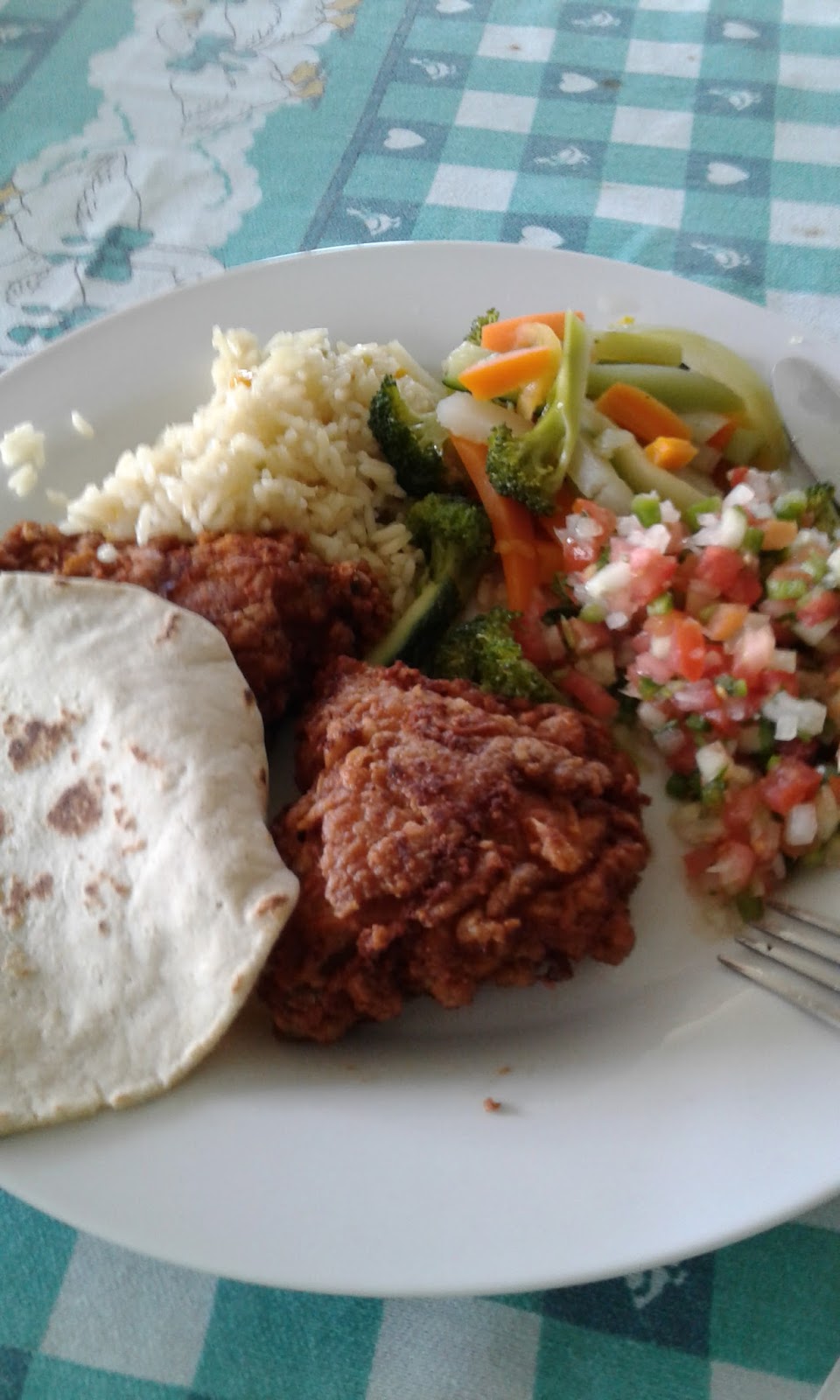

You will probably notice the lack of fiber in our diet. But no need to worry about that. Trust me.
Helen PGY3
Helen PGY3
Monday, July 31, 2017
Thinking of the Children
Going to a country that has so much poverty, makes me very thankful for what we have in the US. I see these children and realize how little social mobility they have, and how much fun they have and how happy they are to receive cheap small toys that we bring over, and I can't help but feel a bit of guilt.
These children don't have access to regular health care. Many of them die from diarrheal illness, or pneumonia. If any of them had asthma, they don't have inhalers, and probably if severe, they would die. Children go to school until their parents can't afford them not working. Medications cost money and these family live on dollars a day.
We had a trash pick up day on Monday after clinic, and we tried to clean up some of the trash littering the village. The children were so eager to please! They climbed up hills and clambered down into ditches to gather up soda bottles, chip bags, candy wrappers, old shoes, ecetera, touching trash that I would cringe at touching even though I had gloves on. They worked so hard, it was so endearing.
At the end of clinic on Wednesday, we had lunch delivered to us: yuca with ground pork with pico de gallo, and many of us could not finish our portions. A number of little boys from the village asked for the leftovers and happily finished our half eaten portions. Can you imagine being so hungry that you would gladly eat what someone else picked over and didn't want?
On Thursday, I was part of a group that applied fluoride treatment to the children's teeth, and so many of them had cavities so bad, there was more cavity than tooth left! I hoped that all the rotted teeth were baby teeth, but if their baby teeth were so bad, one could only wonder what chance they really have growing up.
One afternoon, a number of us rode with Don Israel up the mountain road in a pick-up truck to visit a child who was blind. He came out in a hurry to greet us and he was so excited to show us how he could ride his bike. He then went into the house and played us a song on the piano - self taught! It really brought tears to my eyes. It never ceases to amaze me the enthusiasm, resilience, and bright spirit of children everywhere.
-Helen Lam PGY3
These children don't have access to regular health care. Many of them die from diarrheal illness, or pneumonia. If any of them had asthma, they don't have inhalers, and probably if severe, they would die. Children go to school until their parents can't afford them not working. Medications cost money and these family live on dollars a day.
We had a trash pick up day on Monday after clinic, and we tried to clean up some of the trash littering the village. The children were so eager to please! They climbed up hills and clambered down into ditches to gather up soda bottles, chip bags, candy wrappers, old shoes, ecetera, touching trash that I would cringe at touching even though I had gloves on. They worked so hard, it was so endearing.
At the end of clinic on Wednesday, we had lunch delivered to us: yuca with ground pork with pico de gallo, and many of us could not finish our portions. A number of little boys from the village asked for the leftovers and happily finished our half eaten portions. Can you imagine being so hungry that you would gladly eat what someone else picked over and didn't want?
On Thursday, I was part of a group that applied fluoride treatment to the children's teeth, and so many of them had cavities so bad, there was more cavity than tooth left! I hoped that all the rotted teeth were baby teeth, but if their baby teeth were so bad, one could only wonder what chance they really have growing up.
One afternoon, a number of us rode with Don Israel up the mountain road in a pick-up truck to visit a child who was blind. He came out in a hurry to greet us and he was so excited to show us how he could ride his bike. He then went into the house and played us a song on the piano - self taught! It really brought tears to my eyes. It never ceases to amaze me the enthusiasm, resilience, and bright spirit of children everywhere.
-Helen Lam PGY3
Wednesday, July 26, 2017
The Worried Well - Jessica DeJarnette, R3
The Worried
Well
An interesting phenomenon every
primary care physician can attest to is the number of patients on their schedule
who consist of the “worried well” or otherwise healthy people who aren’t that
ill but come to the doctor for very minor complaints. Ailments like the common
cold, eczema, constipation, or a small scratch; all very minor afflictions not
requiring treatment from a medical professional drive some people to take time
out of their schedule to pay us a visit. At times these visits are annoying, as
they can be time-consuming for something very minor, but at times they are
uplifting, for example reassuring someone with a headache that it is likely due
to dehydration and not to a brain tumor. In the developed world, many of these
patients are retired and elderly, with little to no copay so a visit to the
doctor every now and then fits right into their routine. Then you have the
highly educated patients who spend a bit too much time on Google and think they
have a rare disease they read about that explains their myriad of symptoms that
is usually attributable to stress, poor diet, lack of exercise or sleep. Then
there are the first-time parents who bring their child in for every sniffle,
convinced they have pneumonia and need antibiotics. All of these patients are a
regular and welcome part of my practice. Part of the reason I switched careers
from Emergency to Family Medicine was to have more of this type of patient; to
be able to give people good news (“It’s just a cold, you’re going to be fine in
a week!”) instead of the all too-often tragic news I had to give to families of
the trauma patients I saw in the ED.
For many years, I thought the
phenomenon of worried well only affected those living in developed nations with
regular access to a car and the internet, but after this last week working in
Honduras I have noted this is not just a phenomenon in the developed world.
Having worked internationally in several different settings from Latin America
to Sub-Saharan Africa and Southeast Asia, I can attest to the variety of severe
diseases that preferentially affect the rural poor such as tuberculosis,
malaria, and malnutrition. Additionally, a variety of chronic diseases such as
hypertension, diabetes, and coronary artery disease are affecting developing
nations thanks to the trickle-down bad habits of developed nations such as
processed foods, cigarettes, and inactivity. These are fast become the norm in
many societies that once lived more traditional and active lifestyles.
I think most physicians from
developed nations who work internationally in more impoverished nations have
some sort of expectation of advanced disease and exotic illnesses as compared to
their usual patient population. I know I have been guilty of this assumption
many times while volunteering abroad. Yet the more short medical volunteer trips
I go on, the more I notice the phenomenon of the “worried well” is not just
confined to wealthier countries. A volunteer doctor in a refugee hospital
elegantly describes this sentiment too in the quote
below:
“I could hardly believe how
many people waited in clinic all day long because of colds, headaches, or other
minor ailments that my grandmother could have treated. They came in for a
variety of reasons, such as a need for reassurance, validation of their illness,
or a “laying on of hands.” No matter where you practice, the “worried well” …
are part of your everyday routine.”
-Dr. Timothy Holtz
A Year in Little Lhasa: One
Year in Dharamsala with the Tibetans in Exile
What I noted in Honduras was
that many patients complained of cough and cold but didn’t seem to have any
symptoms. When I would tell them they were fine they suddenly would also
complain of a headache or stomach pain and request medications. Sometimes they
flat out told me they just wanted some antibiotics or vitamins, or just wanted
me to check their children to make sure they “looked alright.” Again, I was more
than happy to oblige-well child checks are a regular part of my practice, but I
would say the vast majority of patients I saw in Honduras were healthier than my
patients in Vallejo! There are obvious other socioeconomic and educational
concerns, and they cycle of poverty is very much at play in rural Honduras, but
based on what I witnessed last week, most of the adults and children appeared to
be in very good health. This is a very good, but surprising thing to me, and
granted was just a very small glimpse in time of a very small portion of
Honduras population. Many people, including the project leaders, told us how
much the health of the local villagers had improved since project ENLACE started
coming.
I am reassured to hear this
good news, and hope that our future efforts will continue to improve the health
of the people in Taulabe to the point where volunteer doctors are no longer
needed. I am also amazed by the common human need we all have to be touched,
validated, and told that we are okay just as we are.
Dr. Jessica de
Jarnette
PGY-3 Kaiser Napa-Solano Family
Medicine
Tuesday, July 25, 2017
The Generosity of Children - Jessica DeJarnette, R3
As a member of the largest group of
Kaiser volunteers to join the Honduras ENLACE trip since its inception two
years ago I am particularly impressed by one aspect of this group that sets it
apart from other volunteer projects I have worked with: the number of children
on our team and their enthusiasm. We had approximately fourteen kids in our
group ranging in age from 7 to 18 (there is a lovely 6 month old as well, but
for the purposes of this post I will focus on those old enough to walk J);
I have volunteered for a variety of projects in the past, but have never worked
with such a large group of children. I enjoy interacting with kids but have
never considered them to be particularly helpful when it comes to clinical
work.
However, I was proven wrong by the
youth on this trip. Their laughter, their exuberance, their eagerness to help
out in any task no matter how menial, was so impressive. The laughter, spirit
of collaboration and excitement made this week both meaningful and fun. It was
loud and at times chaotic, but overall these kids, in my opinion, contributed
more to the project than the medical providers. They were running the pharmacy,
interviewing patients, assisting the dentists, doing art with the local children,
hauling luggage, building latrines, basically anything that had to do with the
project they were involved with in some capacity. They also collected soccer
cleats in the US to hand out to the local children in Las Lajas. And all of
this on their summer break, when most of their peers would just want to be
hanging out with their friends or playing video games. I heard very little
complaining despite a vastly different diet and living conditions then most of
them are accustomed to. Additionally the enthusiasm was still present even
though a vast majority of the group fell sick to various GI ailments that tend
to greet visitors to the tropics with vigor!
I remember being around 10-12 years
old and wanting so badly to feel useful. I couldn’t wait to be a grown-up when
people would actually take me seriously and I could contribute something
meaningful. Now that I am technically a grown-up with grown-up
responsibilities, I long for the freedom and silliness of youth. Working and
living alongside 14 children and teenagers this week was an excellent reminder
to me that even though being a physician is a very demanding and extremely
serious profession by nature; one should always strive to find joy in your work
and daily life, no matter how menial it can seem. Alongside this special group
even counting out pills into small plastic baggies felt like fun! This week was
a great reminder to me that without joy, work can lose its meaning, and begin
to feel more like indentured servitude. Lately my life has felt like more of
the latter as I am going on my fourth year of residency, and am about to
celebrate my 10th anniversary of starting a career in medicine.
Applying for jobs and thinking about exceedingly boring (sorry financiers!)
adult things like 401(k)s, variable interest rates, and mortgages is the part
of adulthood that my twelve year old self neither knew much about nor looked
forward to.
That being said, I am going to try and remember the lessons I
learned from my young colleagues this trip as I have a lot of adulting to do
this year:
1) An excellent way to blow off
steam at the end of a long work day is to play a pick-up game of soccer
2) Glove balloons never get old
3) Knowing a couple of goofy jokes
is a great way to fire up the crowd
4) Everyone has something meaningful
to contribute, no matter their age or education level J


Subscribe to:
Posts (Atom)